


Beginner Gymnastics Skills Needed Before a Kip
The kip is one of the biggest milestone skills in gymnastics. It opens the door to many more gymnastics bars skills, including casts, clear hips, giants, and eventually higher-level bar routines.
Because the kip is such an important skill, many gymnasts are eager to learn it as quickly as possible. But trying to learn a kip before mastering the basics often leads to frustration and bad habits.
If you're wondering what skills before a kip your gymnast should have, you're in the right place. Building a strong foundation with the right beginner bars skills will make learning a glide kip much smoother and more successful.
Why Progressions Matter
One of the biggest mistakes beginner gymnasts make is rushing into advanced skills before they're ready.
In gymnastics, every skill builds on the one before it. That's why coaches spend so much time teaching basic shapes, swings, and strength before introducing a kip.
Following proper gymnastics progressions helps gymnasts:
learn safer technique
build confidence
develop good habits
reduce frustration
master bars skills faster
The stronger the foundation, the easier the kip becomes.
1. A Strong Front Support
Before learning a kip, every gymnast should be comfortable holding a strong front support on the bar.
A proper front support includes:
straight arms
tight core
shoulders pressed tall
hips against the bar
straight legs with pointed toes
Since a kip finishes in front support, this position should feel natural and controlled.
If front support feels shaky, it's usually a sign that more strength is needed before moving on to a glide kip.
2. Hollow Body Position
Ask almost any gymnastics coach about the most important body shape on bars, and they'll probably say the hollow body.
The hollow position is used throughout nearly every gymnastics bars progression.
Gymnasts should be able to:
hold a hollow position
perform hollow rocks
maintain body tension
transition smoothly between hollow and pike positions
Strong hollow body control helps improve glide swings, kip timing, and overall bar technique.
3. Glide Swings
A glide swing is one of the most important skills before a kip.
Without a strong glide swing, there isn't enough momentum to complete the skill.
Good glide swings should include:
straight arms
extended shoulders
long body position
tight core
pointed toes
Many gymnastics kip struggles actually begin with poor glide swings rather than the kip itself.
One of the best beginner bars tips is spending plenty of time perfecting glide swings before attempting full kips.
4. Compression Strength
Compression is the ability to quickly bring your legs toward your upper body while keeping your core tight.
This movement is critical during a glide kip because it helps bring the hips toward the bar.
Gymnasts can improve compression with:
V-ups
hanging leg lifts
seated compression lifts
pike lifts
snap-up drills
Compression is often overlooked, but it's one of the biggest pieces of successful gymnastics progressions.
5. Grip Strength
Bars require strong hands and forearms.
If a gymnast struggles to hold onto the bar during glide swings, learning a kip becomes much more difficult.
Simple grip-building exercises include:
hanging from the bar
chin-up holds
dead hangs
rope climbs
bar support holds
Grip strength builds confidence while improving overall bars performance.
6. Shoulder Strength and Flexibility
Healthy shoulders are essential for every bars skill.
Strong, mobile shoulders allow gymnasts to:
create longer glide swings
maintain better body positions
generate more momentum
improve overall bar technique
Simple shoulder exercises and stretches should be a regular part of beginner gymnastics conditioning.
7. Basic Bar Timing
Many people assume a kip is mostly about strength.
In reality, timing plays an even bigger role.
Before learning a kip, gymnasts should understand:
when to glide
when to lift the toes
when to compress
when to shift the wrists
when to finish in front support
Learning these movements through drills makes the full skill much easier later.
Don't Rush the Kip
One of the biggest pieces of advice I give beginner gymnasts is not to rush learning a kip.
It's exciting to move on to bigger skills, but skipping important beginner bars skills often creates habits that are much harder to fix later.
Taking time to master:
glide swings
front support
hollow body
compression
body tension
basic timing
will usually help gymnasts learn their kip faster than simply attempting the full skill over and over.
Remember, progress isn't about moving to the next skill as quickly as possible—it's about building the right foundation.
Final Thoughts
Learning a kip is an exciting milestone, but it shouldn't be the first goal on bars. The best gymnasts spend time developing the skills before a kip, because those fundamentals make everything else easier.
If your gymnast has mastered:
front support
hollow body position
glide swings
compression strength
grip strength
shoulder mobility
basic bar timing
they'll be much more prepared to learn a smooth, consistent glide kip.
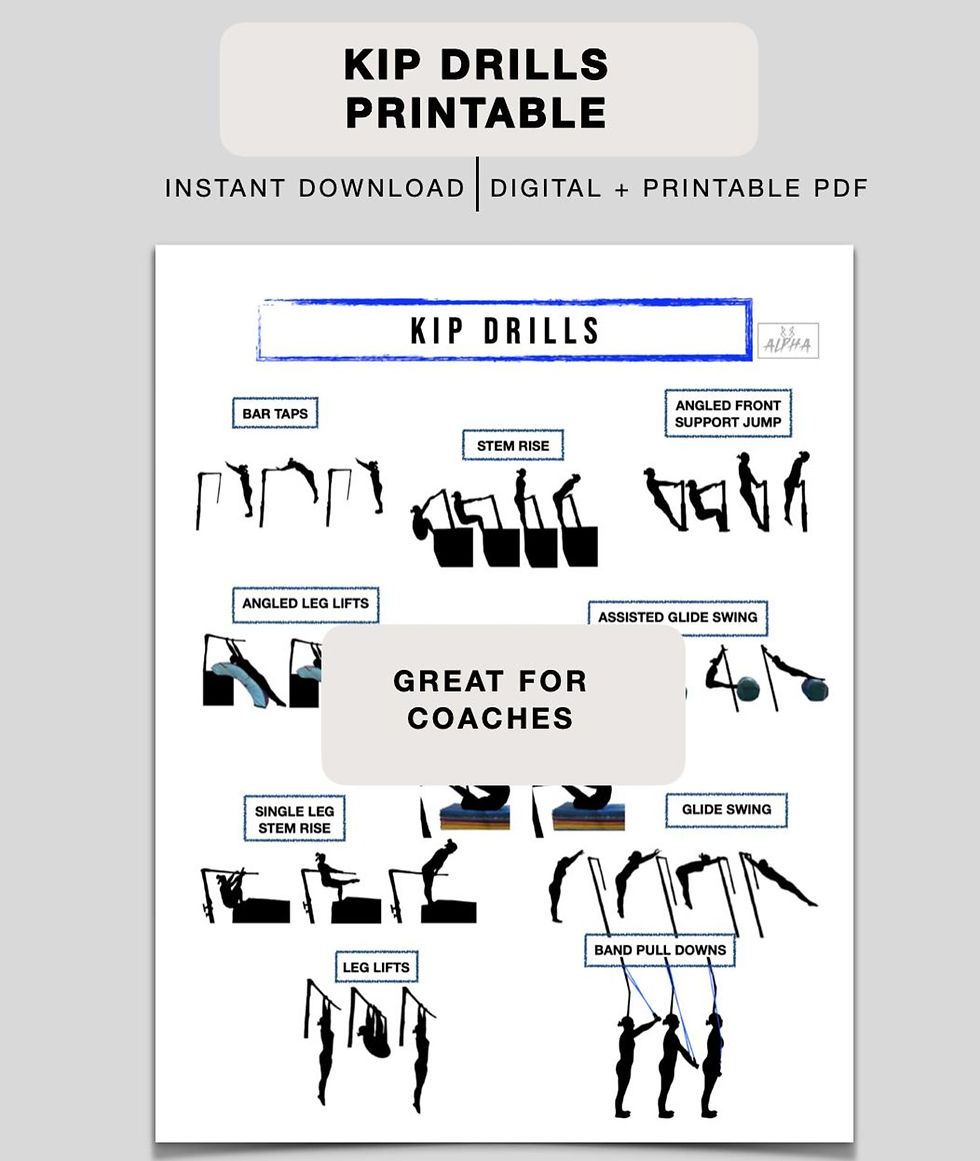
If you're looking for structured gymnastics progressions and beginner-friendly bar drills, I also created a Kip Drills Sheet that walks gymnasts through the progression step by step. It includes drills for glide swings, body shaping, timing, compression, and strength to help build the foundation every gymnast needs before learning a kip.
Comments