


Why You Lose Momentum in Your Glide Swing
If your kip feels stuck, heavy, or like it dies halfway through the skill, there’s a good chance the real problem is your glide swing. One of the biggest gymnastics kip struggles beginner gymnasts face is losing momentum during the glide.
A strong glide swing creates the power and movement needed for a smooth glide kip. Without enough kip momentum, gymnasts often compensate by bending their arms, muscling the skill, or throwing themselves backward.
The good news is that most glide swing mistakes are fixable once you understand what is causing the loss of momentum.
Why the Glide Swing Matters So Much
The glide swing is the foundation of a kip.
The glide creates:
momentum
extension
rhythm
timing
upward movement toward front support
If the glide swing loses energy too early, the rest of the kip becomes much harder.
Many beginner gymnasts focus only on the finish of the kip, but most kip problems actually begin during the glide swing itself.
One of the best gymnastics bars tips is:
“A better glide swing usually creates a better kip.”
Your Glide Swing Is Too Short
One of the most common glide swing mistakes is simply not gliding far enough.
A short glide creates very little momentum, forcing gymnasts to rely heavily on arm strength during the kip.
Many gymnasts accidentally shorten the glide by:
bending the knees
piking too early
dropping the feet quickly
bending the arms
pulling too soon
A strong glide swing should feel:
long
stretched
smooth
controlled
The more extension a gymnast creates during the glide, the easier it becomes to carry kip momentum into the rest of the skill.
You’re Bending Your Arms Too Early
A bent arm kip kills momentum fast.
Many beginner gymnasts panic during the glide swing and immediately start pulling with their arms. This shortens the body position and cuts off the natural swing needed for a glide kip.
Straight arms help:
maintain momentum
create longer swings
improve timing
keep pressure through the bar
One of the biggest beginner bars tips is learning patience during the glide instead of trying to muscle the kip early.
You’re Losing Hollow Body Tension
Body tension is one of the biggest keys to maintaining kip momentum.
When gymnasts arch or loosen their core during the glide swing:
energy leaks out
momentum slows down
timing gets disrupted
the kip feels heavier
Strong hollow body positioning helps transfer energy smoothly through the skill.
This is why so many glide swing drills focus on:
hollow holds
hollow rocks
body shaping
compression strength
tight core control
A tight body moves better on bars.
You’re Dropping Your Toes Too Fast
This is one of the biggest glide swing mistakes coaches see all the time.
A lot of gymnasts bring their toes upward but immediately drop them before finishing the upward motion of the kip. Once the toes drop too early, momentum disappears and the gymnast struggles to rise to front support.
Instead, gymnasts should focus on:
keeping the toes elevated longer
staying compressed
driving the hips upward
finishing the kip before opening up
This helps momentum continue upward instead of backward.
Your Timing Is Off
Even strong gymnasts can struggle with kip timing.
A glide kip happens quickly, but each piece needs to happen at the correct moment:
long glide
fast toes
compression
wrist shift
rise to front support
If one phase happens too early or too late, momentum can disappear.
Common kip timing mistakes include:
pulling too early
opening the hips too soon
rushing the toe drop
leaning backward too fast
Good kips feel smooth because the timing flows naturally from one phase into the next.
Weak Shoulder Extension Can Hurt Your Glide
A lot of gymnasts do not realize shoulder flexibility affects glide swings.
If the shoulders cannot fully extend during the glide:
the swing becomes shorter
momentum decreases
body tension gets harder to maintain
Improving shoulder mobility and flexibility can help create longer and smoother glide swings.
Glide Swing Drills That Help Build Momentum
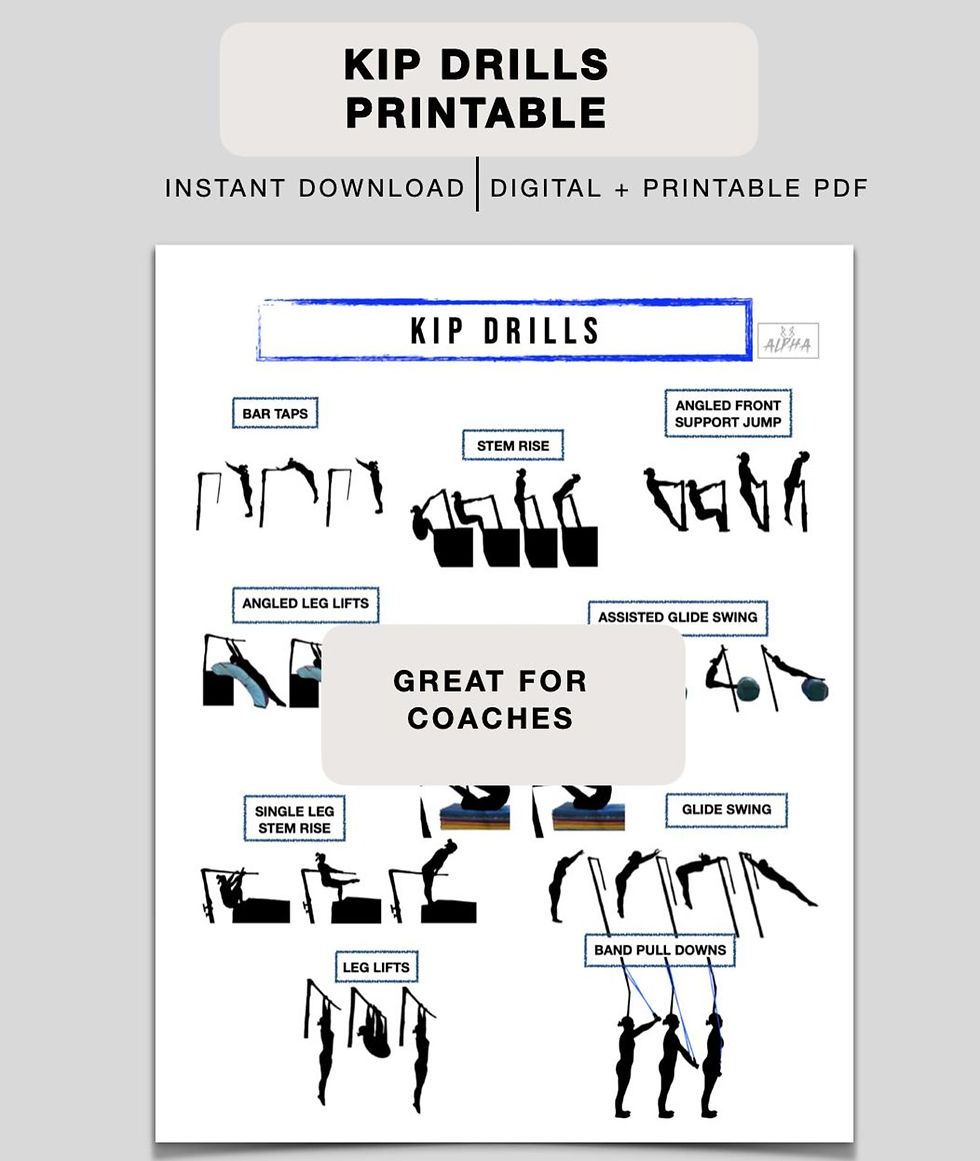
Some of the best glide swing drills for improving kip momentum include:
straight body glide swings
hollow glide swings
hanging hollow holds
compression lifts
hanging leg lifts
glide swing rebounds
floor hollow snap drills
These gymnastics bars drills help improve:
timing
body tension
extension
toe speed
swing rhythm
Sometimes improving the glide swing alone can completely change a gymnast’s kip.
Glide Swing Drills That Help Build Momentum
Some of the best glide swing drills for improving kip momentum include:
straight body glide swings
hollow glide swings
hanging hollow holds
compression lifts
hanging leg lifts
glide swing rebounds
floor hollow snap drills
These gymnastics bars drills help improve:
timing
body tension
extension
toe speed
swing rhythm
Sometimes improving the glide swing alone can completely change a gymnast’s kip.
Comments