


Why Your Kip Feels Heavy
If your kip feels heavy, exhausting, or like you have to muscle your way over the bar every single time, you are definitely not alone. One of the biggest gymnastics kip struggles for beginner gymnasts is feeling like the kip takes way more effort than it should.
A kip should require strength, but it should not feel like doing a full pull-up with your entire body weight. When a kip feels hard, there is usually a timing, momentum, or body position issue happening somewhere during the skill.
The good news is that most heavy kips can be fixed with the right kip corrections and drills.
You’re Trying to Muscle the Kip
One of the most common kip strength problems is relying too much on arm strength instead of momentum and timing.
A lot of gymnasts think:
“If I just pull harder, I’ll get my kip.”
But a glide kip is not meant to be forced completely with the arms.
When gymnasts muscle the skill:
arms bend too early
the glide swing shortens
momentum disappears
the kip feels heavier
A strong kip combines:
glide swing momentum
hollow body tension
fast toes
compression
proper wrist shift timing
One of the best gymnastics bars tips is learning to let the glide create momentum instead of trying to pull yourself up immediately.
Your Glide Swing Is Too Small
A short glide swing is one of the biggest reasons a kip feels hard.
The glide swing creates the momentum needed to bring the hips upward toward the bar. If the glide is short or rushed, gymnasts usually compensate by trying to muscle the rest of the skill.
Common glide swing mistakes include:
bent knees
loose body tension
arching
piking too early
dropping the feet too fast
A strong glide swing should feel:
long
stretched
tight
controlled
Improving glide swings alone can completely change how light a kip feels.
You’re Dropping Your Toes Too Early
This is one of the biggest kip timing mistakes coaches see all the time.
Many gymnasts bring their toes to the bar, but immediately drop them before finishing the upward motion of the kip. Once the toes drop too early, the momentum dies and the gymnast has to rely almost entirely on arm strength.
Instead, gymnasts should focus on:
keeping the toes elevated longer
staying compressed
driving the hips upward
finishing the kip before opening up
This creates smoother momentum and helps the kip feel lighter and more controlled.
You’re Losing Hollow Body Tension
Body tension matters a LOT in gymnastics bars skills.
When gymnasts lose hollow body positioning during the kip, the body becomes loose and disconnected. This makes the skill feel heavy because momentum leaks out during the glide and toe lift phase.
Strong hollow body shaping helps:
improve kip timing
maintain momentum
create faster toe lifts
keep pressure on the bar
This is why hollow holds, hollow rocks, compression drills, and core exercises are so important for beginner gymnastics conditioning.
Your Toes Are Too Slow
Fast toes are one of the biggest secrets to making a kip feel easier.
A lot of gymnasts struggling with a hard kip simply move their toes too slowly to the bar. Slow toes delay the entire timing of the skill and force the gymnast to pull harder with the arms.
Fast toes help:
lift the hips
improve momentum
reduce arm strain
create smoother kips
Good kip timing often matters more than raw strength.
You’re Bending Your Arms Too Early
A bent arms kip almost always feels heavier.
When the arms bend too soon:
the glide swing shortens
momentum stops
the gymnast pulls underneath the bar
hips struggle to rise upward
Straight arms during the glide and toe lift phase help the body move more efficiently through the skill.
Many beginner gymnasts accidentally make the kip harder by trying too hard too early.
Strength Still Matters
Even though timing and technique are huge parts of a kip, strength does still matter.
Some common kip strength problems include weak:
core muscles
lats
shoulder strength
compression strength
grip endurance
Basic gymnastics conditioning exercises that help kips include:
hollow holds
hanging leg lifts
V-ups
pull-ups
compression lifts
glide swing drills
The goal is combining strength with proper kip technique.
Final Thoughts on Why Your Kip Feels Heavy
If your kip feels hard or exhausting, don’t get discouraged. Almost every gymnast goes through gymnastics kip struggles while learning glide kips and bars skills.
Usually a heavy kip comes from:
poor kip timing
short glide swings
dropping toes too early
bent arms
weak hollow body tension
trying to muscle the skill
Small kip corrections can make a huge difference in how smooth and light your kip feels.
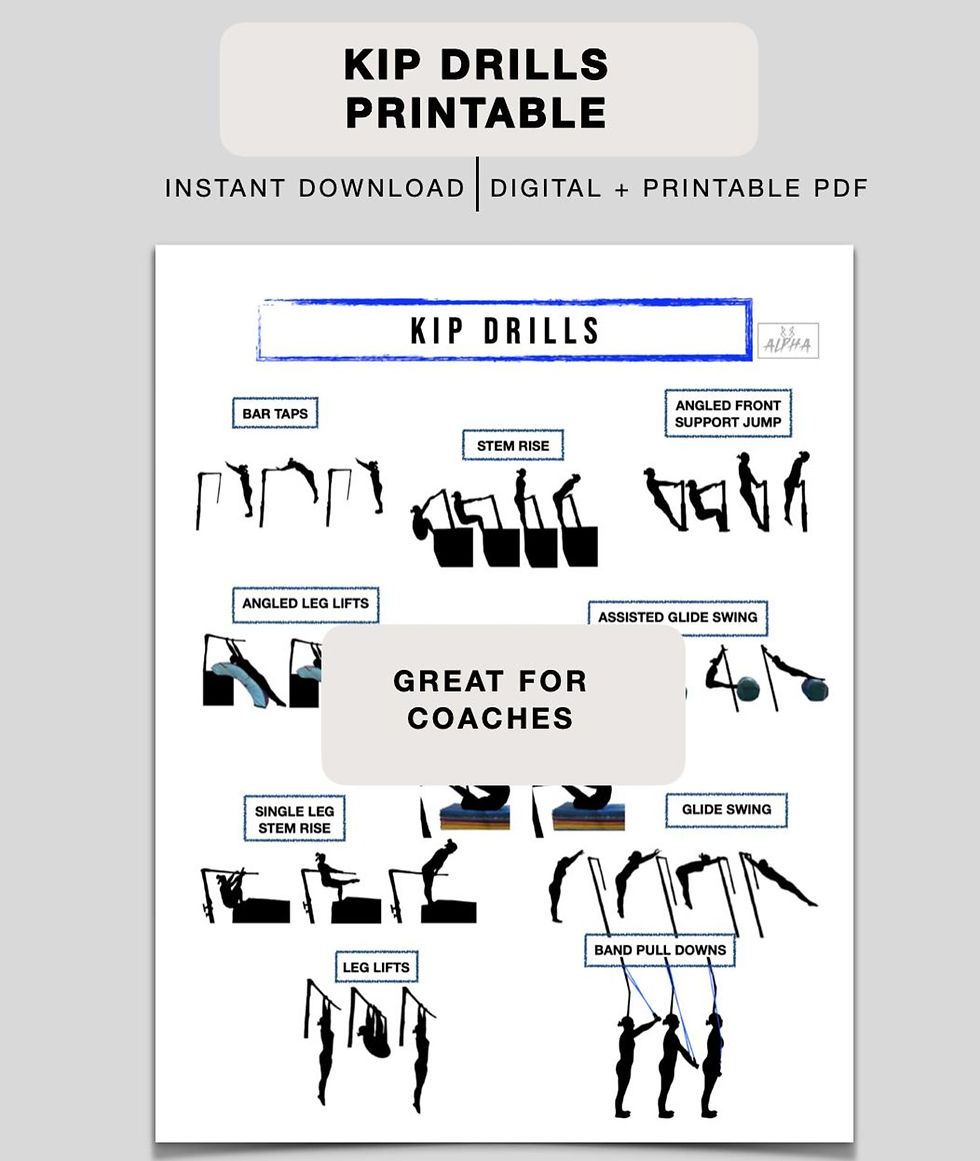
If you’re working on improving your kip timing, shaping, and strength, I also created a Kip
Drills Sheet packed with drills for:
glide swings
compression
body tension
strength
timing
beginner gymnastics bars progressions
Sometimes one small timing fix can make a kip suddenly feel ten times easier.
Comments