


Why Your Kip Keeps Falling Backward
Few things are more frustrating in gymnastics than finally getting close to a kip… only to fall backward immediately after. If your kip keeps falling backward, you are definitely not alone. This is one of the most common gymnastics bars mistakes beginner gymnasts make while learning a glide kip.
The good news is that this usually is not a strength issue. Most of the time, a kip falling backward comes from timing, body position, or momentum problems during the skill.
Once you understand what is causing the issue, the kip often starts improving much faster.
You’re Leaning Back Too Early
One of the biggest kip timing mistakes is leaning backward before fully finishing the kip.
A lot of gymnasts get nervous about getting over the bar, so they immediately throw their shoulders backward the second they feel their hips rising. This shifts the body weight behind the bar and causes the gymnast to fall backward instead of staying tall in front support.
A strong kip should finish:
tall over the bar
shoulders slightly forward
tight through the core
controlled in front support
One of the best gymnastics bars tips for this problem is thinking:
“Finish tall before leaning.”
Rushing backward too early almost always throws off balance.
You’re Dropping Your Toes Too Fast
This is one of the most common glide kip problems coaches see.
Many gymnasts bring their toes toward the bar but immediately drop them before fully finishing the upward motion of the kip. When the toes drop too quickly, the momentum disappears and the body swings backward.
Instead, gymnasts should focus on:
keeping toes elevated longer
staying compressed
driving the hips upward
finishing the kip before opening up
This helps keep momentum moving vertically instead of backward.
Your Glide Swing Is Too Short
A weak glide swing creates weak momentum.
If the glide swing is short or loses tension, gymnasts often compensate by throwing themselves backward at the end of the kip to try to force front support.
Common glide swing mistakes include:
bent knees
loose core
arching
short glide extension
bending arms too early
A longer, stronger glide swing creates smoother momentum into the kip and makes balancing over the bar much easier.
You’re Missing Hollow Body Tension
Body tension is a huge part of good kip timing.
When gymnasts lose hollow body positioning during the kip, their body becomes loose and difficult to control. This often causes the hips and shoulders to separate, making the gymnast peel backward after reaching the bar.
Strong hollow body positioning helps:
control momentum
stabilize front support
improve kip timing
keep the body stacked over the bar
This is why hollow holds, hollow rocks, and compression drills are so important for gymnastics bars training.
You’re Pulling With Bent Arms
Bent arms are another major cause of a kip falling backward.
When gymnasts bend their arms too early, they usually pull themselves underneath the bar instead of allowing momentum to rise naturally upward. This creates a heavy kip and makes it difficult to finish balanced on top of the bar.
Straight arms during the glide and toe lift phase help:
maintain momentum
improve timing
create smoother bar pressure
reduce swinging backward
Many beginner gymnasts try to muscle the kip instead of letting the skill work correctly.
You’re Rushing the Kip
A kip happens fast, but many gymnasts actually rush the wrong parts of the skill.
They:
rush the toe drop
rush the sit-up motion
rush the finish
throw themselves backward
Good kips are quick, but they are also controlled.
One of the best gymnastics kip tips is learning patience during the glide and compression phase while staying aggressive with fast toes and tight body tension.
Final Thoughts on a Kip Falling Backward
If your kip keeps falling backward, don’t panic. This is one of the most common gymnastics bars mistakes for beginner gymnasts learning glide kips.
Usually the issue comes from:
leaning backward too early
dropping the toes too fast
weak glide swings
bent arms
poor kip timing
losing hollow body tension
Small corrections in timing and body position can completely change how your kip feels.
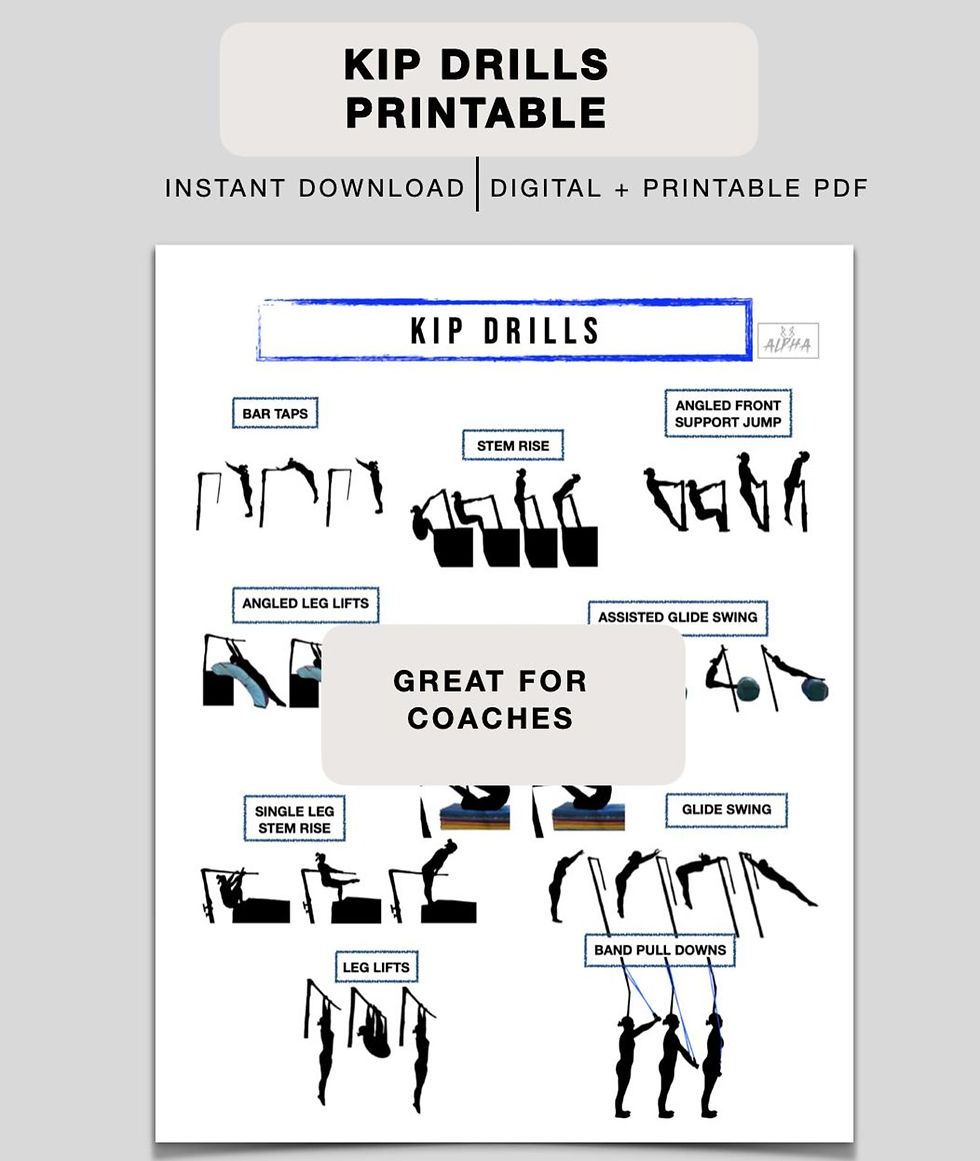
If you’re working on improving your kip timing and front support control, I also created a Kip
Drills Sheet packed with drills for:
glide swings
body shaping
compression
timing
strength
beginner gymnastics bars progressions
Sometimes one small timing fix is all it takes for a kip to finally click.
Comments