


Basic Kip Drills for Beginner Gymnasts
The kip is one of the most important gymnastics bars skills, but it can also be one of the most frustrating skills to learn. A glide kip requires timing, strength, body tension, and technique all working together at the same time. That’s why simply “trying the kip” over and over usually is not enough.
The good news is that breaking the skill down into basic kip drills can make learning a kip much easier.
Whether you’re a beginner gymnast, parent, or coach, these gymnastics kip drills can help improve glide swings, shaping, timing, and strength for bars.
Why Kip Drills Matter
A kip is not just one movement. It is several smaller movements combined together:
the glide swing
hollow body control
toe lift
wrist shift
front support timing
If one piece is weak, the whole kip can struggle.
That’s why gymnastics drills are so important for beginner bars training. Drills help gymnasts focus on specific parts of the skill without getting overwhelmed.
Glide Swing Drills
One of the biggest glide swing mistakes beginner gymnasts make is having a short or loose glide.
A strong glide swing creates momentum for the entire kip.
When practicing glide swings, gymnasts should focus on:
straight arms
long body position
tight core
pointed toes
extended shoulders
A good glide swing should feel long and controlled rather than rushed.
Hollow Body Holds
Hollow body strength is one of the most important parts of a glide kip.
Without hollow body control, gymnasts often arch during the kip, lose tension, or struggle to bring their hips to the bar.
Basic hollow drills include:
hollow holds
hollow rocks
V-ups
dish holds
tight body snap drills
These drills help gymnasts build body tension for gymnastics bars skills and improve shaping during the kip.
Hanging Leg Lift Drills
Many beginner gymnasts struggle with bringing their toes to the bar quickly enough during the kip.
Hanging leg lifts help improve:
core strength
compression strength
toe lift speed
bar awareness
When doing hanging leg lifts, gymnasts should focus on lifting their toes quickly while keeping straight legs and tight form.
Fast toes are extremely important in a strong gymnastics kip.
Floor Kip Drills
Floor kip drills are great because they allow gymnasts to practice timing without worrying about the full skill on the bar.
These drills can help gymnasts understand:
toe lift timing
the sit-up motion
wrist shift action
body shaping
Floor drills are especially helpful for beginner gymnasts still learning how the kip should feel.
Front Support Hold Drills
A lot of gymnasts finally get their hips close to the bar but struggle to finish in a strong front support.
Practicing front support holds can help improve:
shoulder strength
bar control
cast preparation
body tension
This is one of the most overlooked gymnastics bars tips for improving kips.
Kip Timing Drills
Timing is one of the hardest parts of learning a glide kip.
Many gymnasts:
bend their arms too early
drop their toes too quickly
rush the sit-up motion
lose momentum underneath the bar
Basic kip timing drills help gymnasts learn when to:
lift the toes
shift the wrists
pull the hips to the bar
finish tall in front support
Even strong gymnasts can struggle with kip timing if they skip drill work.
Final Thoughts on Basic Kip Drills
Learning a kip takes patience and repetition. Almost every gymnast struggles with kip mistakes at some point, especially when learning beginner gymnastics bars skills for the first time.
The key is focusing on strong basics:
glide swings
hollow body strength
toe lifts
shaping
timing drills
Small improvements in these areas can make a huge difference in the consistency of a gymnastics kip.
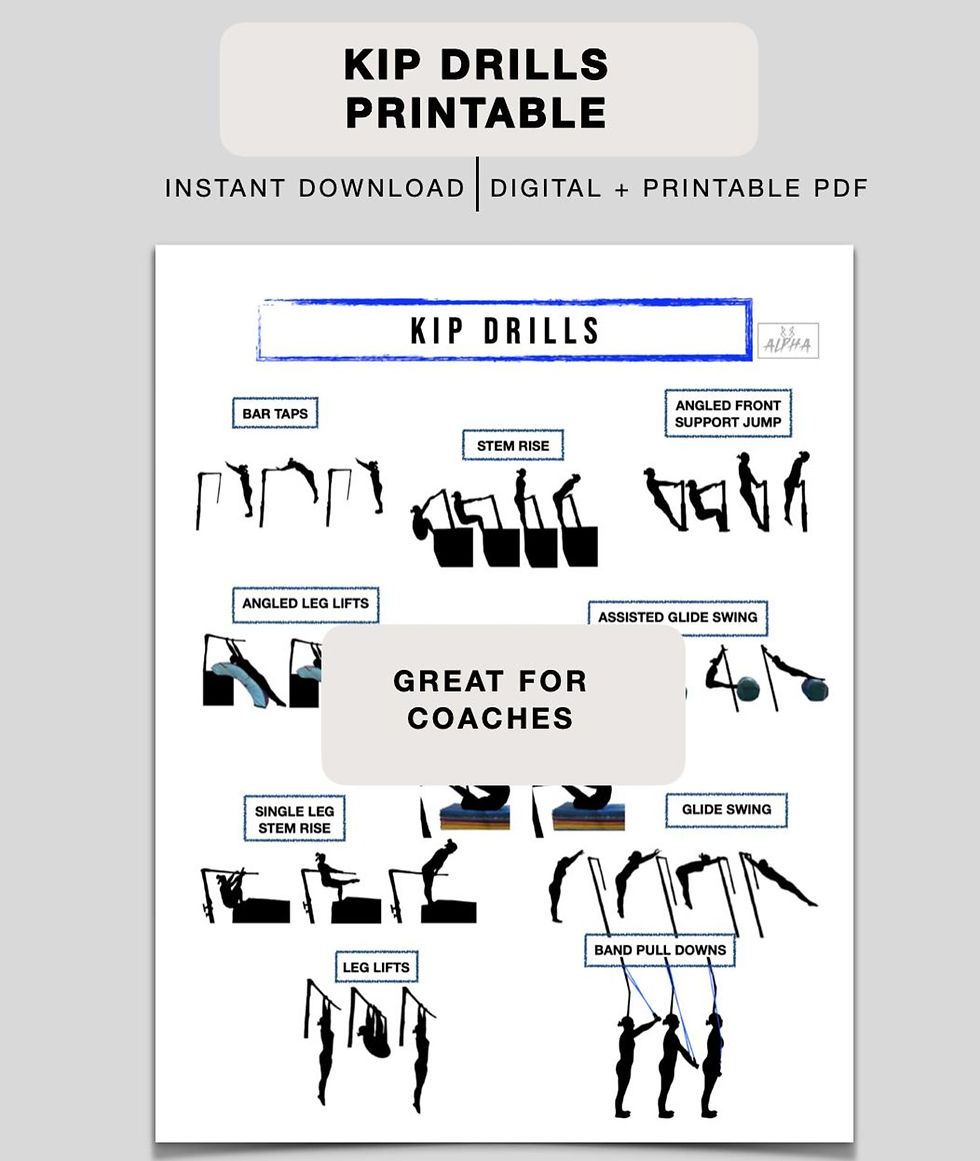
If you’re looking for more structured kip drills, I also created a Kip Drills Sheet that includes drills for glide swings, shaping, strength, timing, and beginner kip progressions for bars training.
Comments