


The Most Common Kip Mistakes in Gymnastics
- Kaley Willekes
- May 26
- 4 min read
Updated: May 27
If you’ve been working on your kip for a while, you’re definitely not alone. The kip is one of the most frustrating gymnastics bars skills to learn because it combines timing, strength, technique, and shaping all at once. A gymnast can have a strong glide swing but struggle with timing. Another gymnast might have the strength but keep making the same glide swing mistakes over and over.
The good news? Most kip mistakes are extremely common and fixable with the right drills and corrections.
Whether you’re a beginner gymnast learning a glide kip for the first time or a coach looking for gymnastics bars tips, here are some of the biggest mistakes gymnasts make when learning a kip.
Bent Arms During the Kip
One of the biggest kip mistakes coaches see is a bent arms kip.
A lot of gymnasts try to pull themselves to the bar too early by bending their arms instead of using proper glide swing mechanics and hollow shaping. While it may feel stronger in the moment, bent arms usually make the kip harder.
When the arms bend too soon:
the glide swing becomes shorter
the gymnast loses momentum
hips stay too far from the bar
the kip often stalls underneath the bar
Instead, gymnasts should focus on:
a long glide swing
keeping arms straight during the glide
bringing toes to the bar quickly
fast wrist shift and sit-up action
Straight arms help transfer momentum much more efficiently during a gymnastics kip.
Poor Glide Swing Position
Many glide swing mistakes actually happen before the kip even starts.
A weak or incorrect glide swing makes the rest of the skill much harder. The glide swing creates momentum for the kip, so if the glide is short, piked incorrectly, or loses tension, the kip usually struggles too.
Common glide swing mistakes include:
feet dragging too low
piking too early
arching during the glide
losing hollow body tension
bending knees
A strong glide swing should stay long and controlled while maintaining tension through the core and shoulders.
For beginner gymnastics bars training, improving glide swings alone can make a huge difference in kip consistency.
Dropping the Toes Too Early
One of the biggest kip mistakes I see as a coach is gymnasts dropping their toes too early before finishing the glide kip.
A lot of gymnasts bring their toes up to the bar, but instead of keeping them there and driving the motion through the kip, they immediately drop their feet downward too fast. This usually causes the gymnast to lose pressure against the bar and miss the “skin the shins” feeling needed for a strong kip.
When gymnasts drop their toes too early:
hips stay far from the bar
momentum disappears
the kip feels heavy
arms bend to compensate
the gymnast gets stuck underneath the bar
In a good kip, the toes should stay elevated longer than most beginner gymnasts think. The gymnast should feel almost like they are dragging or skimming their shins upward toward the bar before finishing the sit-up action into front support.
One of the best gymnastics bars tips for fixing this is thinking:
“Keep the toes up longer.”
Another helpful correction is focusing on fast feet to the bar, but patient feet away from the bar.
This is one of the most common glide swing mistakes in beginner gymnastics, especially for athletes who rush the kip because they’re trying too hard to get on top of the bar quickly.
Throwing the Head Back
A surprisingly common gymnastics kip problem is throwing the head backward.
When gymnasts throw their head back, the body often arches and loses tight shaping. This can pull the hips away from the bar and make the kip feel heavy.
Instead, gymnasts should:
keep a neutral head position
stay hollow through the core
focus eyes forward or slightly down
Good body tension is one of the biggest keys to improving bars skills.
Bringing the Feet to the Bar Too Slowly
Timing is everything in a glide kip.
A lot of gymnasts have enough strength for a kip but struggle because their feet move too slowly to the bar. The faster the toes snap upward, the easier it becomes to shift the wrists and rise to front support.
Fast toes = faster hips.
This is why many kip drills focus heavily on:
snap-down action
hollow rocks
quick pike compression
hanging leg lifts
floor kip drills
Improving speed and timing can completely change the feel of a kip.
Relying Only on Strength
A kip is not just a strength skill.
Yes, strength matters. Core strength, shoulder strength, and lat strength all help with gymnastics bars skills. But many gymnasts get stuck because they try to muscle the kip instead of learning proper timing and technique.
The best kips combine:
glide swing momentum
hollow body shaping
fast toe lift
wrist shift timing
body tension
Technique matters just as much as strength when learning a glide kip.
Casting Too Early
Another extremely common kip mistake is casting too early.
Many gymnasts finally get their hips close to the bar and immediately throw their shoulders backward into a cast before fully finishing the kip. This usually causes the gymnast to peel away from the bar or lose control.
A kip should finish in a strong front support position before the cast begins.
Signs of casting too early include:
falling backward after the kip
arms collapsing
missing front support
low casts after the kip
One of the best gymnastics bars tips for this issue is to think:
“Finish the kip first. Cast second.”
Separating the two skills mentally can help gymnasts clean up their timing.
Final Thoughts on Kip Mistakes
Learning a kip takes time, repetition, and patience. Almost every gymnast struggles with bent arms, casting too early, or glide swing mistakes at some point during kip training.
The key is focusing on one correction at a time and consistently practicing quality drills.
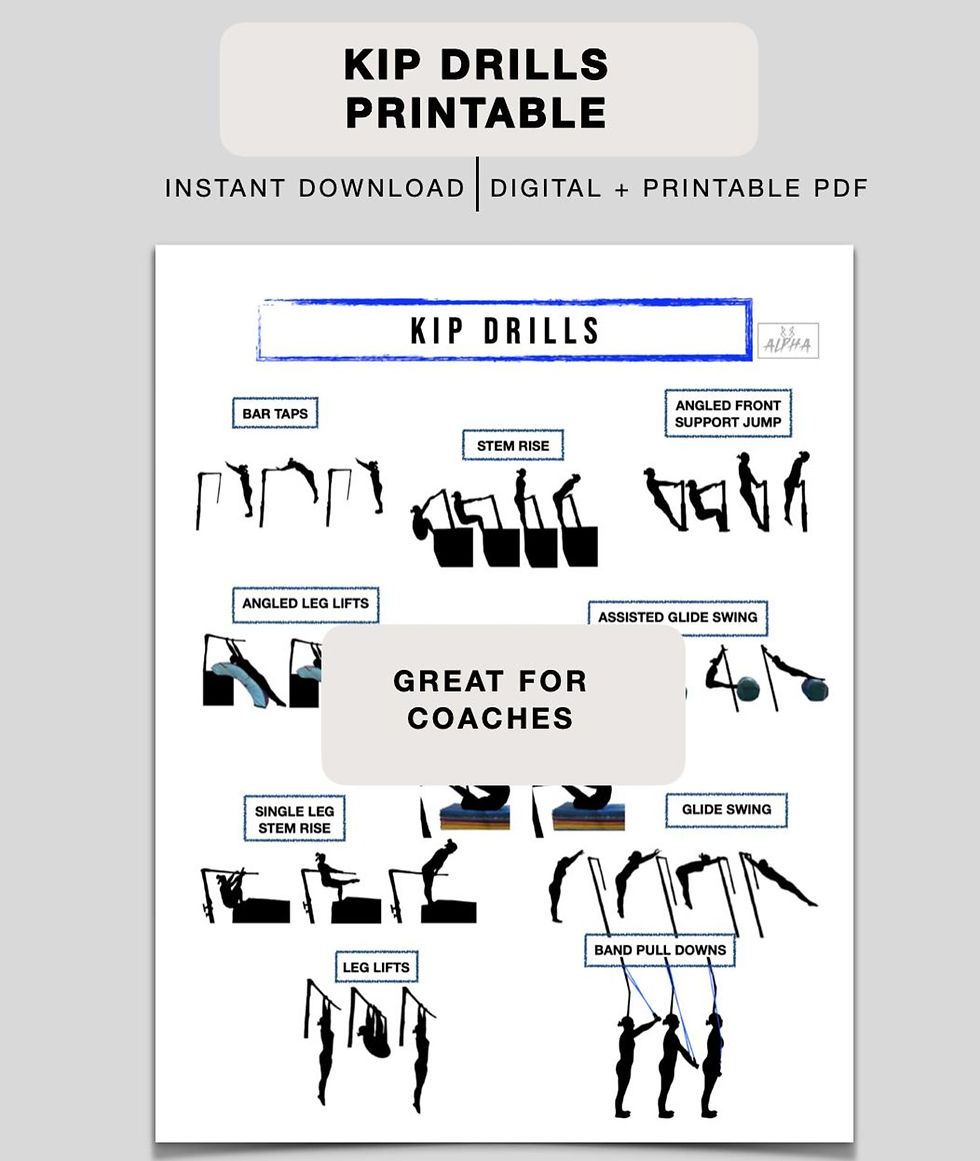
If you’re working on improving your kip, I also created a Kip Drills Sheet packed with drills for:
glide swing improvement
body shaping
timing
strength
front support control
beginner gymnastics bars progressions
Sometimes the smallest correction can completely change your kip.
Comments